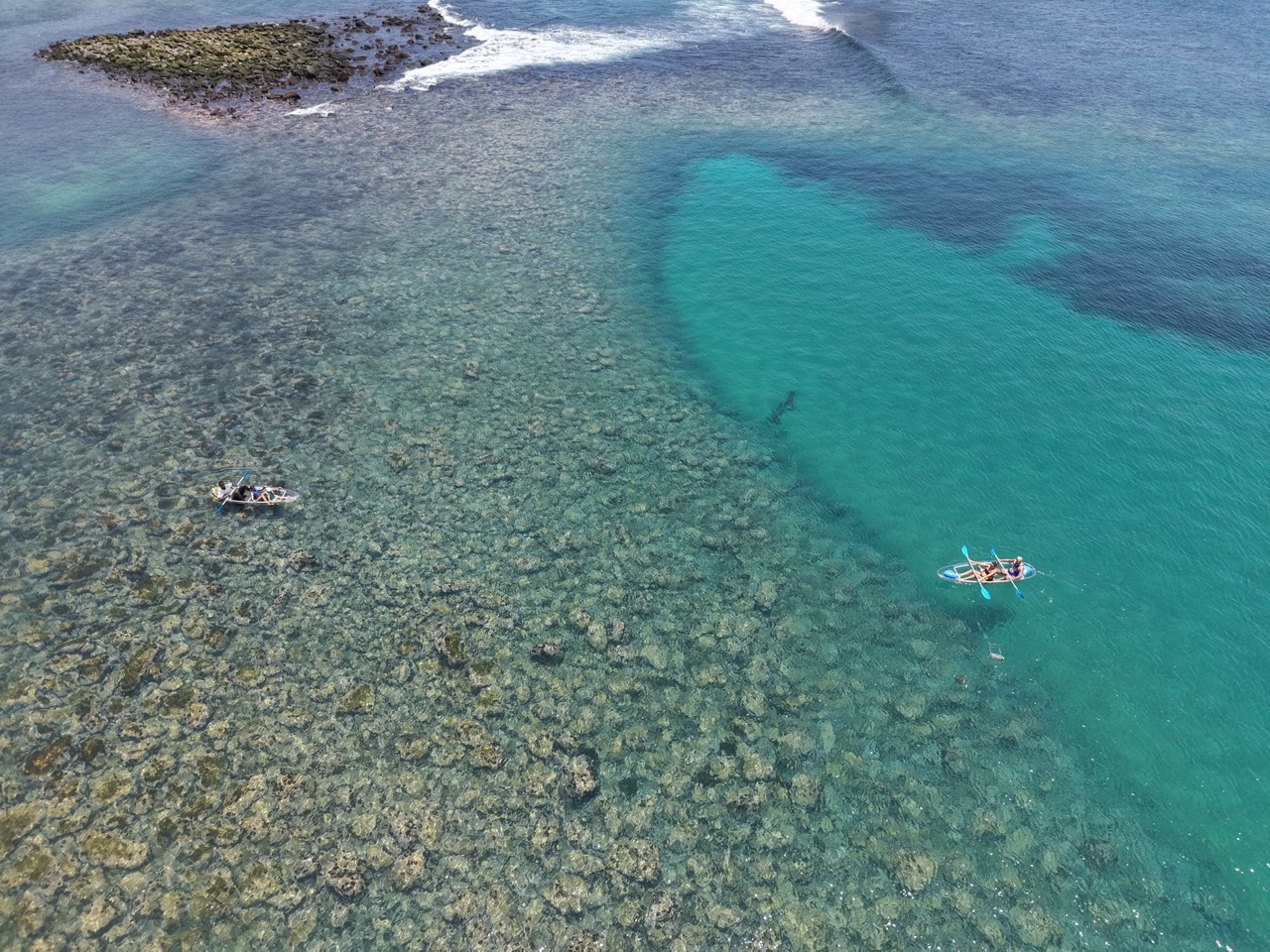
People rarely picture Dakar with crystal-clear water. And yet, on some days, the sea turns a limpid turquoise at the foot of the Ouakam cliffs or around Ngor Island, to the point that you can make out every rock several metres down. Water worthy of the world’s most beautiful beaches, a few minutes from the city centre.
In this guide, we explain why Dakar’s water can be so clear, where to find turquoise water in Dakar, when in the year and in the day it is at its best, and how to enjoy it, in a clear kayak, by boat or with a mask on. At Senegal Nautique, we watch the sea every day from our Ouakam and Ngor bases: here is what we have learned.
An honest note before we start: the sea is the sea. The colour and clarity of the water change with currents, wind and weather, and no one can guarantee crystal-clear water on a given day. But by knowing where and when to look, you put every chance on your side.
Why Dakar’s water can be so clear
Water clarity depends mainly on what it contains: suspended sand, sediment brought by rivers, plankton. The fewer particles there are, the more light passes through the water, and the more visible the seabed becomes. Dakar brings together several conditions that favour limpid water.
First, geology. The Cap-Vert peninsula is volcanic in origin: in Ouakam, the Mamelles, Ngor or the Almadies, the seabed is made of basalt rock rather than fine sand. Sand is easily stirred up by every wave and clouds the water; rock stays in place. Above rocky seabeds, the water therefore keeps its transparency more often, and the contrast between dark rock and pale sand creates those shades of blue, green and turquoise that look so striking from the sky.
Next, the city’s position. Dakar juts out into the Atlantic Ocean, far from the major estuaries: the Senegal River reaches the sea at Saint-Louis, much further north, and the Saloum much further south. The peninsula’s shores therefore receive little sediment from inland, unlike many coastal capitals built near a river. The water around Ouakam and Ngor is open-ocean water, constantly renewed.
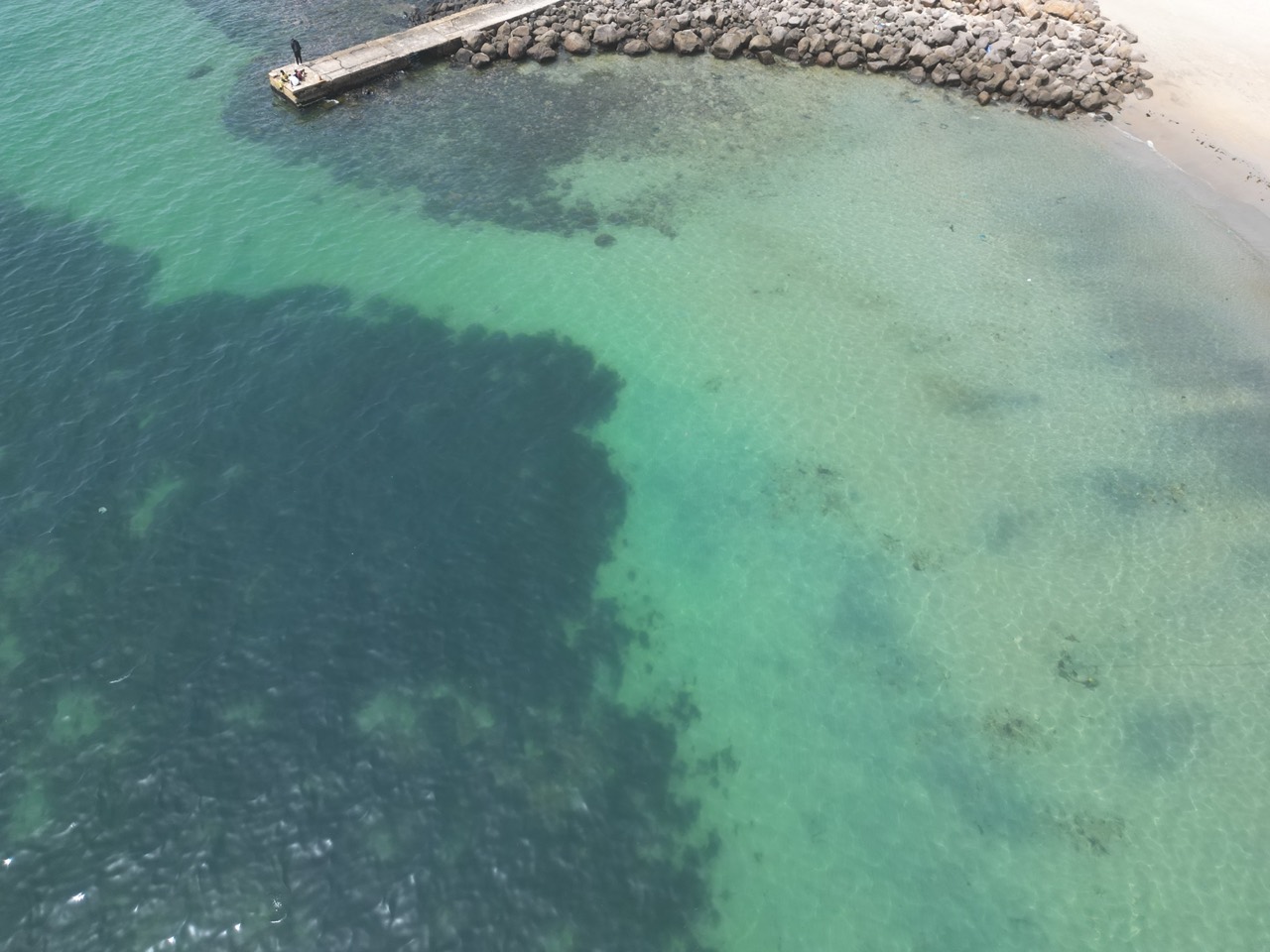
Finally, the sheltered coves and bays. Behind Ngor Island, at the foot of the cliffs or between two rocky points, the swell calms down and the water settles. It is there, in these calm and shallow areas, that you most often see this famous crystal-clear water. By contrast, on the long sandy beaches exposed to the swell, such as Yoff or Malika, the water is generally murkier.
All this explains why Dakar surprises so many visitors: they come for the city, the music and the teranga, and also discover a postcard-coloured sea, a stone’s throw from lively neighbourhoods.
Where to find turquoise water in Dakar
Ouakam, below the Mosque of the Divinity. It is one of the best spots on the peninsula for clear water. The rocky seabed, the volcanic cliffs and the small beach below the mosque form a spectacular setting. On a calm sea, the water takes on a striking turquoise over the rocks, and you can see schools of fish from the surface. This is where our main clear kayak base is.
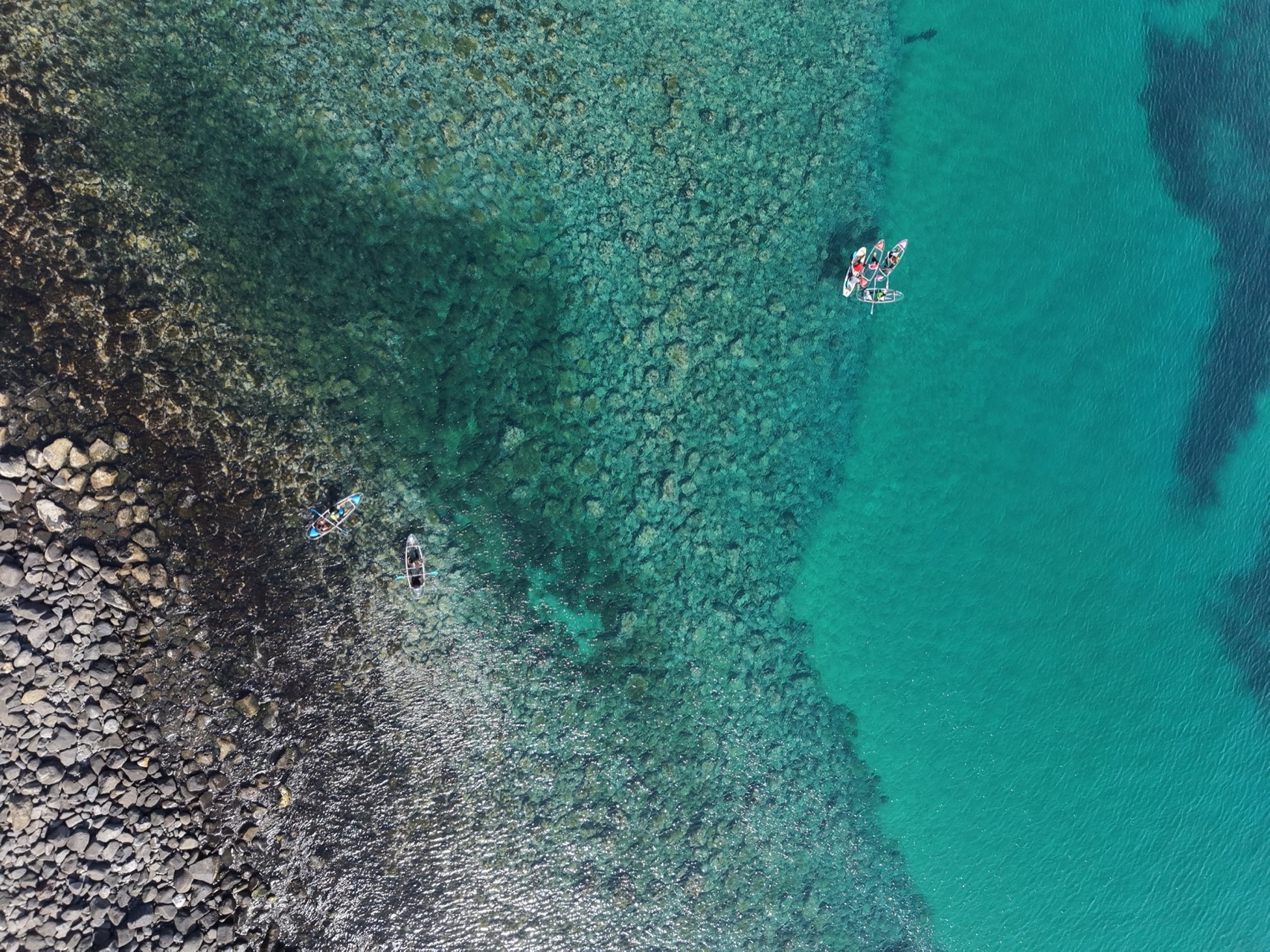
Ngor and its island. Ngor bay is sheltered by the island of the same name, a few hundred metres from the beach. Around the jetty and the edges of the island, the water is often clear and shallow, with rocky seabeds covered in algae and small fish. It is also one of the calmest spots in Dakar, ideal for children and beginners. Our second clear kayak base is on Ngor beach, next to La Cabane du Pêcheur.
The Almadies. The Pointe des Almadies, the westernmost tip of Africa, alternates beaches, rocky flats and small coves. The water is often clear over the rocks, especially when the wind is light. It is a spot we also use for some drone photoshoots, depending on the light.
The Îles de la Madeleine and Sarpan Island. Off Dakar, the Îles de la Madeleine national park protects volcanic islets with turquoise coves. Sarpan Island is discovered by boat, with an anchorage in often remarkable water. It is the wildest option to see Dakar’s crystal-clear water.
Gorée. Gorée Island, facing the port, has a small sheltered beach where the water is often calm and pleasant for swimming. Less spectacular than Ouakam or Ngor for clarity, it remains a lovely stop on a day at sea. And as a bonus, Lac Rose, which is not crystal-clear but pink: a completely different show, an hour from Dakar.
When is the water at its clearest?
There is no absolute rule, but a few trends help you choose the right time to see Dakar’s crystal-clear water.
By season. The dry season, from November to June, often brings clear skies and strong light, which brings out the colours of the water. The end of the dry season and the start of summer are often cited by regulars as a very good period. During the rainy season, from July to October, storms and rain can cloud the water near the shore for a few days, although there are also beautiful days between showers. At certain times, plankton growth can also give the sea a greener tint.
By the day’s weather. This is the most important factor. A calm sea, light wind and moderate swell give the best conditions: the sand stays on the bottom and the water settles. After a gale or a strong swell, it often takes a day or two for the water to regain its clarity. The sun matters a lot too: under an overcast sky, even very clear water looks duller.
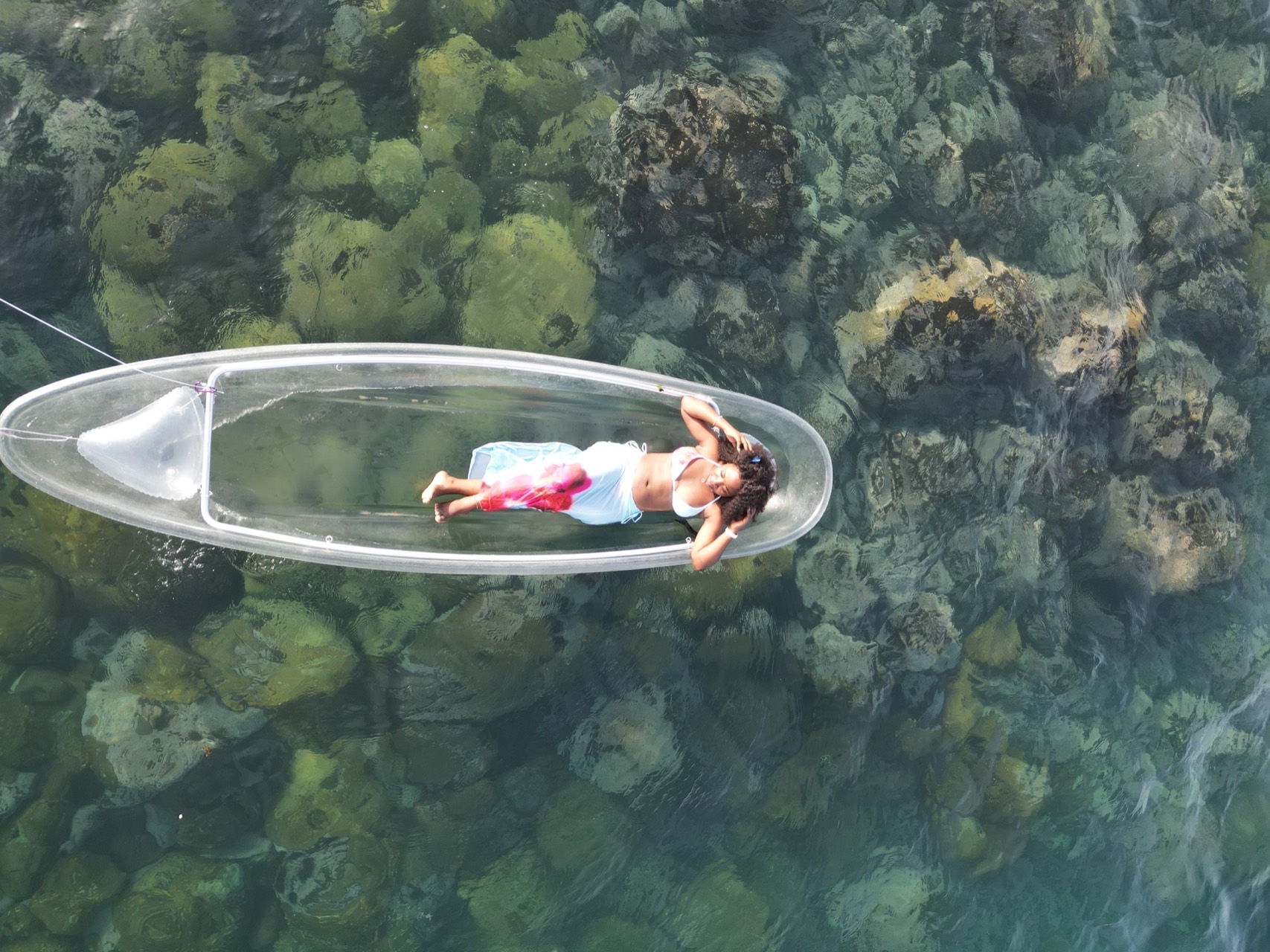
By the hour. When the sun is high, in late morning and early afternoon, light enters the water vertically: it is the best time to see the bottom and for photos from the sky. At the end of the day, the light becomes golden and low, softer for portraits but less favourable to clarity. Early in the morning, the sea is often calmer, before the wind picks up.
Our practical advice: call the base on the day. Our team is on the water every day and will tell you honestly what the sea is like, and whether it is better to come in the morning, in the afternoon or to postpone your outing. A simple call to +221 77 867 55 58 can make all the difference between decent water and magical water.
How to enjoy the clear water
In a clear kayak. It is the best way to see Dakar’s crystal-clear water without getting your head wet. The hull is completely transparent: beneath you, rocks, seagrass and fish glide by as in an aquarium. In good weather, the feeling of floating above the void is striking. The clear kayak costs 6,000 F per kayak, single or double, with or without an instructor, in Ouakam and Ngor, every day from 11am to 7pm. No experience is needed, the life jacket is provided and children are welcome from age 6 with an adult.
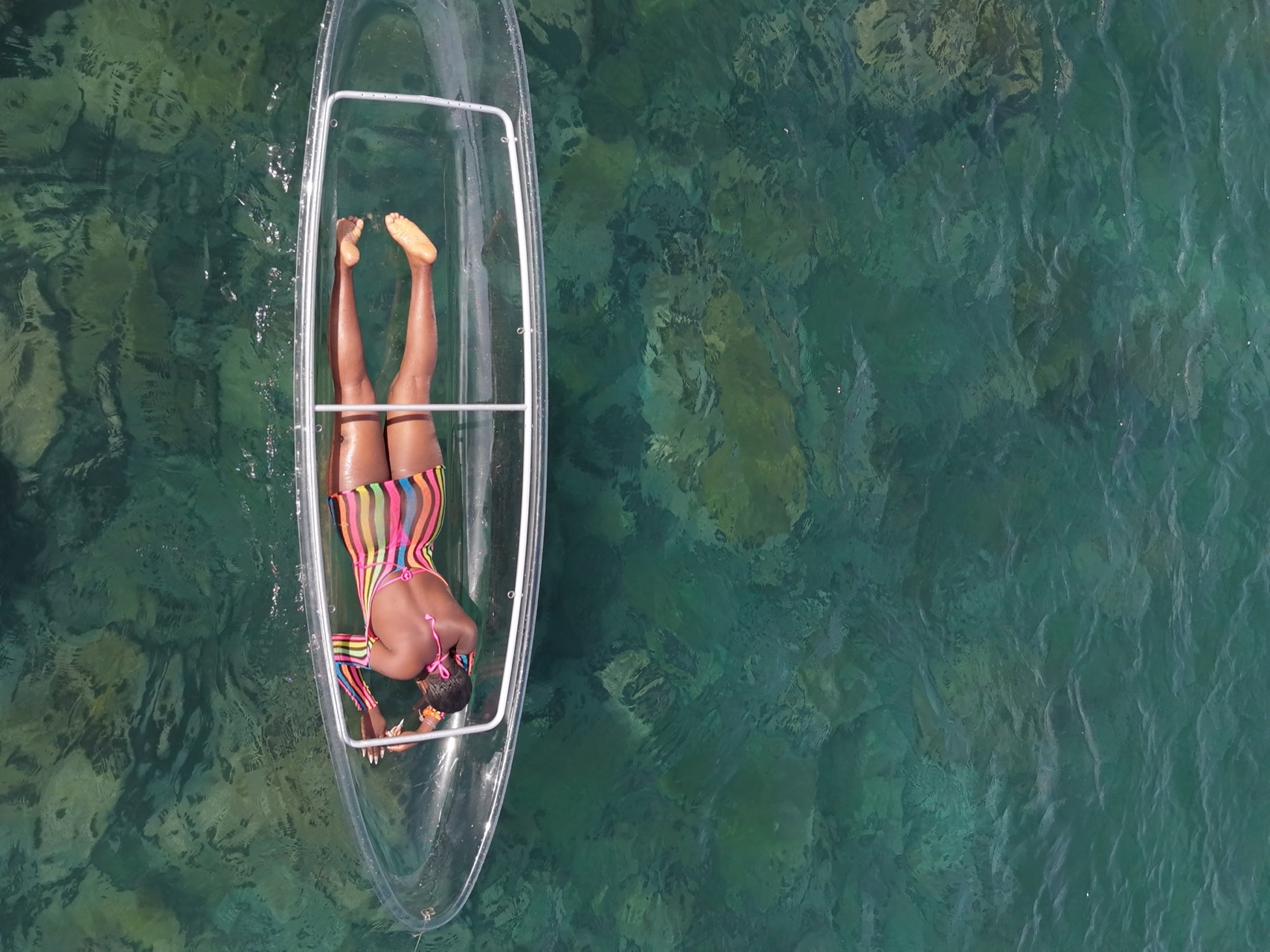
By boat. A boat trip takes you to the most beautiful coves, unreachable on foot, and lets you swim at anchor in deep, limpid water. Our 8 and 15-seat boats depart from the Port of Dakar or Ngor, privatised from 60,000 F. Trips to the Almadies, the Mamelles or Sarpan Island are the best for turquoise water.
With a mask and snorkel. Around Ngor Island and in sheltered coves, snorkelling lets you observe marine life up close: rockfish, sea urchins, starfish and sometimes octopus. Always stay in calm areas, with others, and check the currents before getting in. To go further, the Océanium, on the Corniche Est, offers introductory dives.
On a paddleboard. Standing on the board, you see the bottom from higher up, from a different angle. Paddleboarding costs 5,000 F for 30 minutes in Ouakam and Ngor, depending on sea conditions. It is a great alternative to the kayak for the sportier, and a lovely way to glide silently along the rocks.
Whichever option you choose, think about sun protection: the glare on clear water is strong, and it is easy to get sunburnt without noticing.
Photographing turquoise water
Dakar’s crystal-clear water is a photographer’s dream, provided you know a few tricks.
Get some height. Clarity is much more visible from above than from the surface. From a cliff, a jetty or better, a drone, the water reveals its shades of blue and the shapes of the rocks. That is the whole point of our drone photoshoot: a pilot takes aerial photos and videos of you on a clear kayak, with turquoise water all around. The price: 35,000 F solo, 25,000 F per person for two and 20,000 F per person from three, kayaks on top. The images are sent right after the session.
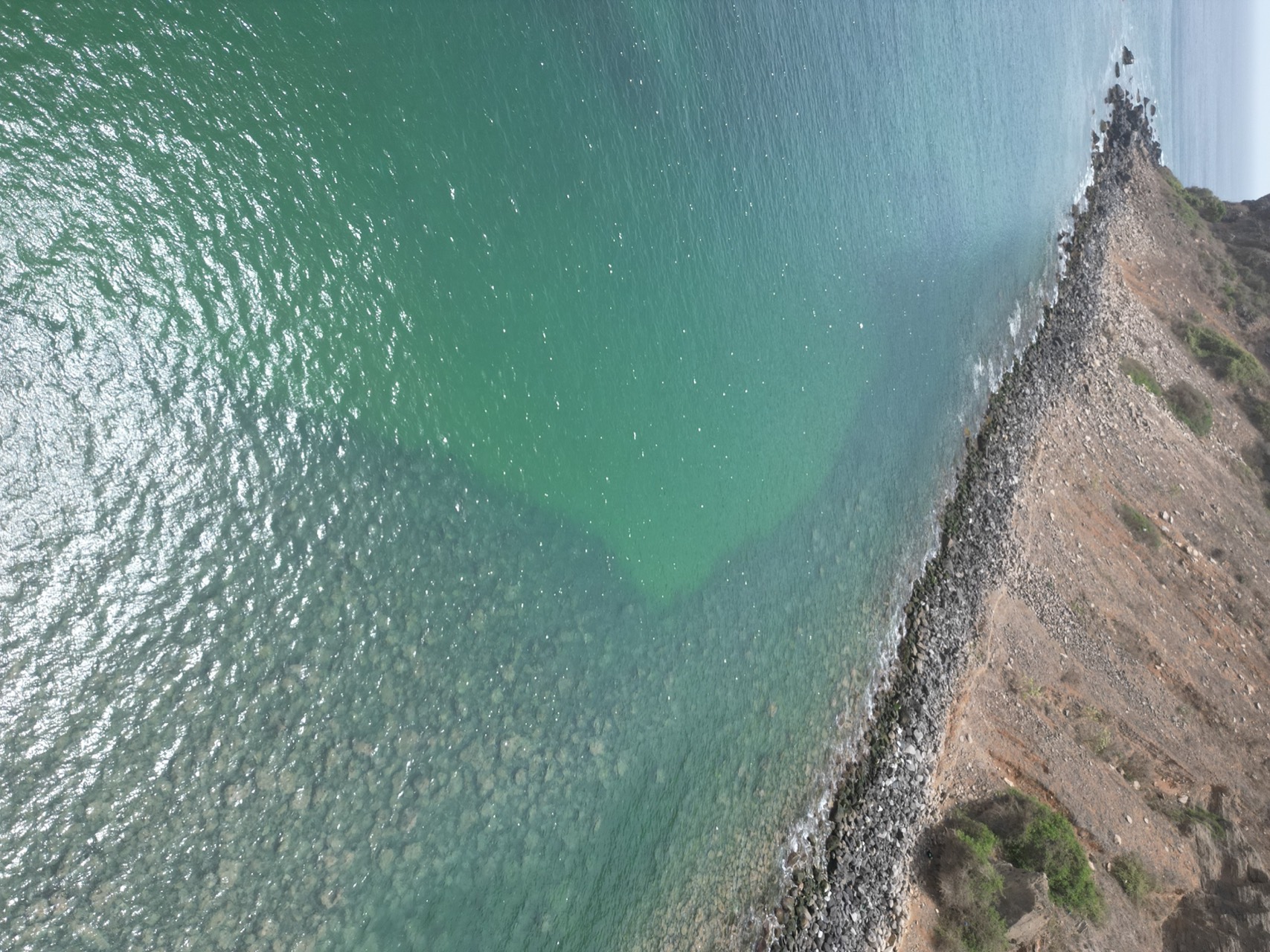
Aim for a high sun. Between late morning and early afternoon, light passes through the water and brings out the bottom. With a phone, keep your back to the sun to avoid reflections. Polarised sunglasses held in front of the lens also cut surface glare and intensify the turquoise: a simple and free trick.
Play with colours. On turquoise, bright outfits stand out beautifully: red, yellow, pink, orange or white. Long dresses, sarongs and flowing fabrics add movement. Avoid blue and green, which blend into the water. For an even more spectacular result, some clients decorate their kayak with flowers, a classic of the Ouakam shoots.
Protect your gear. A waterproof pouch with a lanyard is essential for your phone. Salt damages lenses: rinse your gear with fresh water after the outing. And keep both hands free on the kayak: the team can take photos for you from the beach or from another kayak. Finally, do not underestimate video: a few seconds of a kayak gliding above the rocks tell the story of crystal-clear water better than any photo.
Protecting Dakar’s sea
If Dakar’s water can be so beautiful, it is also because its rocky seabeds are still alive. They shelter fish, octopus, sea urchins, algae and sometimes passing turtles. This balance is fragile, and everyone can help preserve it.
Leave nothing behind. Plastic is the sea’s number one enemy. Take your rubbish with you, avoid disposable bottles and bags, and if you see litter floating near your kayak, pick it up. Our team does it every day at our bases. Do not touch or take anything: sea urchins, starfish and living shells must stay in the water. The rocks are also spawning grounds and shelters for many species.
Choose a reef-friendly sunscreen. Some sunscreens contain filters harmful to marine life. Favour formulas without oxybenzone or octinoxate, apply them at least twenty minutes before getting in the water, and think of a UV shirt, which protects just as well without releasing anything into the sea.
Respect protected areas. The Îles de la Madeleine national park and the marine protected areas along the coast play an essential role in fish reproduction. Landing there is regulated, and it is important to follow the guides’ instructions. Senegal also has committed players in marine protection, such as the Océanium in Dakar, a pioneer in raising awareness of the marine environment.
Finally, favour gentle activities. Kayaking and paddleboarding make no noise and no pollution: they are the most respectful way to discover Dakar’s crystal-clear water. A clear kayak outing is a show for you, with no impact on the fish swimming below. And by telling those around you about the beauty of Dakar’s seabed, you also help make this natural heritage known, and so better protected.
See Dakar’s crystal-clear water
Clear kayak in Ouakam and Ngor, 6,000 F per kayak, life jacket provided. Call us on the day to check sea conditions.
Book a kayakFrequently asked questions
Where can you find crystal-clear water in Dakar?
The best spots are Ouakam, below the Mosque of the Divinity, Ngor bay and island, the Almadies and, offshore, the Îles de la Madeleine with Sarpan Island. Their rocky seabeds and sheltered areas often give very clear water.
Is the water always clear in Dakar?
No. The colour and clarity of the water change with currents, wind, swell and weather. No one can guarantee them: call the base on the day to check sea conditions.
What is the best season for turquoise water in Dakar?
The dry season, from November to June, often offers the best conditions, with clear skies and a calmer sea. During the rainy season, rain can cloud the water for a few days.
At what time is the water most beautiful?
In late morning and early afternoon, when the sun is high and lights up the bottom. It is also the best time for photos taken from the sky.
How can you see the seabed without diving in Dakar?
In a clear kayak: the fully transparent hull shows the rocks and fish beneath you. At Senegal Nautique, it costs 6,000 F per kayak, in Ouakam and Ngor, with no experience needed.
Can you swim in clear water in Dakar?
Yes, especially in Ngor, on Ngor Island, in Gorée or at anchor during a boat trip. Always choose a calm or supervised area and check the currents before swimming.
Why is Dakar’s water so clear in places?
The peninsula’s seabed is mostly volcanic rock, which does not cloud the water like sand, and the city is far from the large rivers that carry sediment. Sheltered coves also let the water settle.